
CNC Machining
Materials
Compare metals and engineering plastics for CNC machining. We help you balance performance, tolerances, machinability, cost, and surface treatments for optimal results.
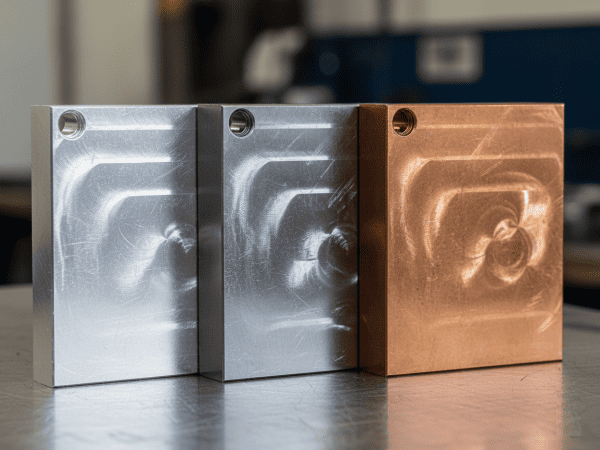
Surface Finishes for CNC Machined Materials
Enhance part performance, appearance, and durability with the right surface treatment for your material choice.
Metal Surface Treatments
Aluminum Finishes
Stainless Steel Finishes
Steel Finishes
Plastic Surface Treatments
Standard Plastic Finishes
Specialty Plastic Treatments
Finish Selection Tips
Common Questions About CNC Machining Materials
Get expert answers to frequently asked questions about material selection for CNC machining projects.
What is the best material for CNC machining?
There's no single "best" material - it depends on your specific requirements. Aluminum 6061 offers the best balance of machinability, cost, and performance for general applications. For high strength, consider 7075 aluminum or 4140 steel. For corrosion resistance, stainless steel 304/316 is ideal. For precision and chemical resistance, engineering plastics like POM or PEEK excel.
When should I choose aluminum vs. stainless steel?
Choose aluminum when you need lightweight parts, excellent machinability, and good corrosion resistance at lower cost. It's ideal for aerospace, electronics, and general manufacturing. Choose stainless steel when you need superior corrosion resistance, higher strength, food-grade compatibility, or parts that will be exposed to harsh chemicals or marine environments. Stainless costs more but offers better durability in demanding applications.
Can plastic materials achieve tight tolerances in CNC machining?
Yes, but with limitations. Engineering plastics like POM (Delrin) and PEEK can achieve tolerances of ±0.05mm to ±0.1mm, depending on part geometry and size. However, they're generally not as dimensionally stable as metals due to thermal expansion and moisture absorption. For critical dimensions, consider material stability, machining temperature control, and post-machining dimensional verification.
How do I choose materials for prototype vs. production parts?
For prototypes, prioritize machinability and cost-effectiveness - aluminum 6061, brass, or POM are excellent choices for testing fit, form, and basic function. For production parts, match the material to end-use requirements: environmental conditions, mechanical loads, regulatory requirements, and cost targets. Sometimes prototype and production materials differ, but ensure functional testing validates the final material choice.
Which surface finishes are compatible with different materials?
Material compatibility varies: Aluminum works with anodizing, powder coating, and plating. Stainless steel is compatible with passivation, electropolishing, and PVD coatings. Carbon steel accepts zinc plating, black oxide, and paint systems. Plastics are limited to mechanical finishes like polishing and texturing, plus some specialized coatings. Always verify finish compatibility with your material grade and part geometry before finalizing specifications.
How much do material costs vary for CNC machining?
Material costs vary significantly: Carbon steel and aluminum 6061 are most economical. Stainless steel costs 2-3x more than aluminum. Specialty alloys like 7075 aluminum or 17-4PH stainless are 3-5x standard material costs. Engineering plastics range from moderate (POM, Nylon) to expensive (PEEK can be 10-15x the cost of aluminum). Consider both material cost and machining time - easier-to-machine materials can offset higher material costs through reduced labor.
Explore More Material Guides
Dive deeper into specific materials and manufacturing processes with our comprehensive resource library.
Aluminum Alloys Guide
Comprehensive comparison of 6061, 7075, 2024, and other aluminum grades with properties, applications, and machining considerations.
Read GuideStainless Steel Selection Guide
Detailed breakdown of 303, 304, 316, and 17-4PH stainless steel grades with corrosion resistance charts and application examples.
Read GuideEngineering Plastics Handbook
Complete guide to POM, PEEK, PTFE, Nylon, and other high-performance plastics for precision CNC machining applications.
Read GuideSurface Finishes Catalog
Visual guide to anodizing, plating, polishing, and other surface treatments with cost comparisons and durability data.
Read GuideTolerance & Precision Guide
Understanding achievable tolerances by material type, part geometry, and machining process with real-world examples.
Read GuideCost Optimization Strategies
Learn how material selection, design modifications, and volume considerations can reduce CNC machining costs by 20-50%.
Read Guide
Get Expert Material
Selection Guidance
Upload your drawings with quantity, application details, and surface finish requirements. Our engineering team will recommend the optimal material and provide a detailed quote within 24 hours.