
Injection Molding
Materials
Compare performance, appearance, temperature resistance, wear properties, cost, and production suitability across engineering plastics to optimize your injection molding project.
The right plastic material supports part performance, moldability, appearance, and cost control.
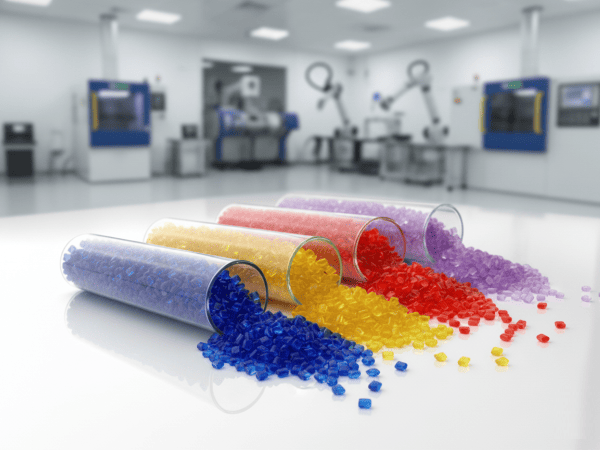
Plastic Material Library
Browse and filter 30 injection-moldable materials by type, attributes, and mechanical properties. Data sourced from engineering datasheets.
Common Questions About
Injection Molding Materials
Expert answers to help you make informed material selection decisions
What's the best plastic material for electronic housings?
For most electronic housings, ABS is the preferred choice due to its excellent balance of properties:
- • Good impact resistance protects internal components
- • Excellent surface finish for professional appearance
- • Easy to paint or apply surface treatments
- • Cost-effective for volume production
- • Good dimensional stability
For applications requiring higher temperature resistance or flame retardancy, consider PC (Polycarbonate) or flame-retardant ABS grades.
ABS vs PC: Which should I choose for my project?
The choice between ABS and PC depends on your specific requirements:
Choose ABS when:
- • Cost is a primary concern
- • Operating temperature < 80°C
- • You need excellent paintability
- • Good impact strength is sufficient
- • Transparency is not required
Choose PC when:
- • High temperature resistance needed (up to 140°C)
- • Crystal clear transparency required
- • Maximum impact strength is critical
- • Flame retardancy is important
- • Premium performance justifies higher cost
POM vs Nylon (PA6/PA66) for mechanical parts?
Both are excellent engineering plastics, but each has distinct advantages:
POM (Acetal) excels at:
- • Dimensional precision and stability
- • Low friction and wear
- • Excellent fatigue resistance
- • Consistent performance in dry conditions
- • Smooth surface finish
Nylon (PA6/PA66) excels at:
- • Higher strength and toughness
- • Better chemical resistance
- • Superior high-temperature performance
- • Excellent wear resistance under load
- • Better for reinforced grades
Recommendation: Choose POM for precision parts like gears and springs. Choose Nylon for high-load structural components.
Which materials work best for transparent parts?
For transparent injection molded parts, consider these options in order of optical quality:
PMMA (Acrylic)
Exceptional optical clarity, UV resistance, scratch resistance. Best for optical applications.
PC (Polycarbonate)
Excellent clarity with superior impact strength. Ideal when toughness is critical.
Clear PP
Good clarity at lower cost, but limited temperature resistance and impact strength.
Should I use different materials for prototypes vs production?
Generally, it's best to use the same material for both prototypes and production to ensure accurate testing and validation. However, there are some considerations:
Prototype Phase Considerations:
- • Use production-grade material whenever possible
- • Natural (uncolored) resin is often more readily available
- • Standard grades before moving to specialized formulations
- • Consider lead times for specialty materials
Production Transition:
- • Validate any material changes with testing
- • Consider colored or UV-stabilized grades
- • Optimize for cost and supply chain reliability
- • Document any processing parameter changes
What are the best heat-resistant plastics for injection molding?
Heat resistance requirements vary significantly. Here's a temperature-based guide:
80-100°C
Standard applications
120-140°C
Automotive, industrial
150-200°C
High-performance applications
200-250°C
Aerospace, extreme conditions
Note: Higher temperature materials typically come with increased cost and processing complexity.
Related Resources
Explore more injection molding topics and manufacturing insights
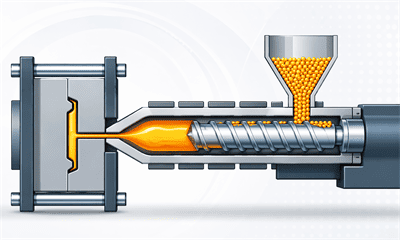
Injection Molding Process Overview
Complete guide to the injection molding process, from mold design to quality control.
Read More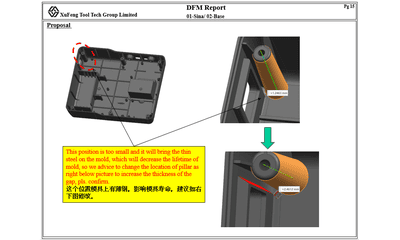
Design for Manufacturing Guidelines
Essential DFM principles to optimize your part design for injection molding success.
Learn More
Injection Molding Cost Optimization
Strategies to reduce tooling and production costs while maintaining quality standards.
Explore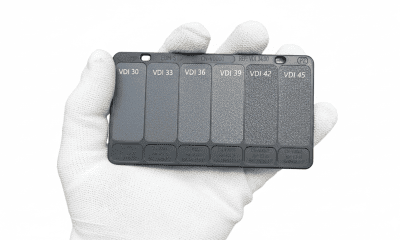
Surface Finish Standards
Understanding SPI surface finish standards and their impact on part appearance and cost.
View Guide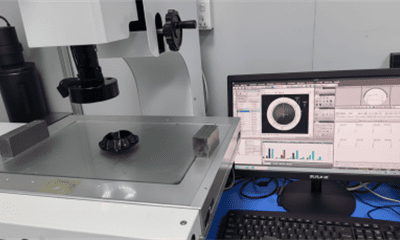
Quality Control Best Practices
ISO-certified quality control processes to ensure consistent part quality in production.
Learn More
Success Stories & Case Studies
Real-world examples of successful injection molding projects across various industries.
View Cases
Get Expert Material Advice
for Your Injection Molding Project
Share your product requirements, intended use, quantity, appearance needs, assembly requirements, and operating environment. Our material engineers will recommend the optimal plastic material and provide detailed DFM analysis.