
High-Volume
Metal Stamping
Services
From progressive dies to deep drawing, Xu Feng delivers precision metal stamping for high-volume production with exceptional quality and consistency.
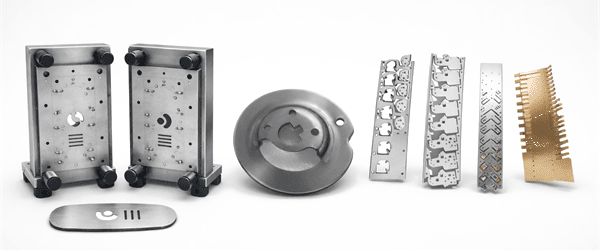
Complete Stamping Solutions
Advanced stamping technologies for automotive, electronics, appliances, and industrial applications with precision dies and high-speed production.
Die & Production Types
Single-Operation Die Stamping
Cost-effective solution for simple parts and medium-volume production. Perfect for prototyping and parts requiring basic cutting, punching, or blanking operations.
- Quick turnaround time for tooling
- Ideal for prototypes and low-medium volumes
- Simple operations: cutting, punching, blanking
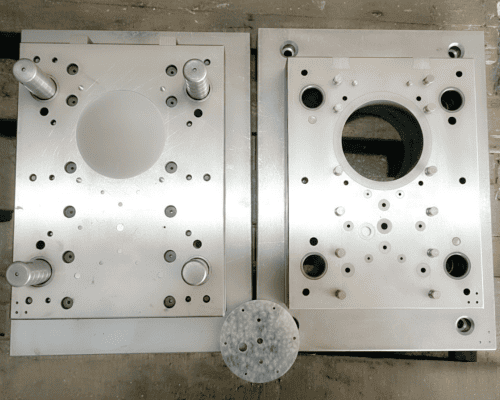
Progressive Die Stamping
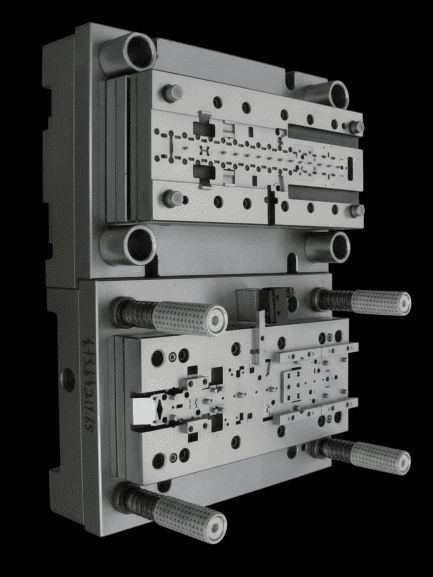
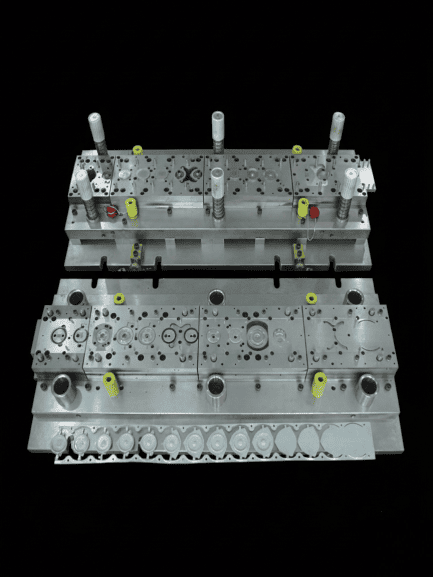
High-speed production of complex parts through multiple operations in a single press stroke. Ideal for high-volume automotive and electronics components.
- Complex multi-stage operations in single stroke
- Minimal material waste and high efficiency
- Excellent for high-volume production
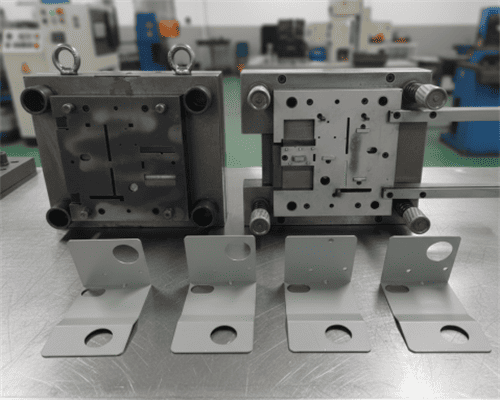
Transfer Die Stamping
Advanced forming process where parts are transferred between stations by mechanical fingers. Perfect for deep drawing and complex 3D shapes requiring multiple forming stages.
- Mechanical transfer between stations
- Complex 3D geometries and deep draws
- High precision and repeatability
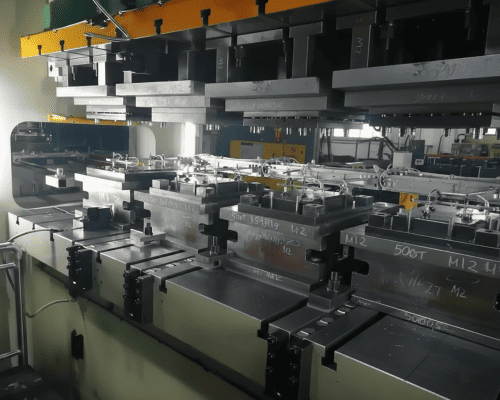
Compound Die Stamping
Multiple operations performed simultaneously in a single stroke at the same station. Combines cutting and forming operations for precise, flat parts with tight tolerances.
- Multiple operations in single stroke
- Excellent for flat parts with tight tolerances
- High precision and surface quality

Stamping Processes & Capabilities
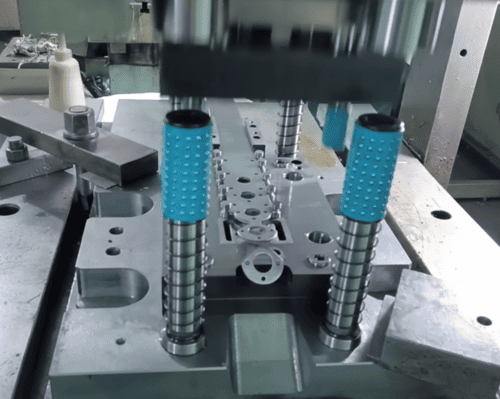
Precision Cutting Operations
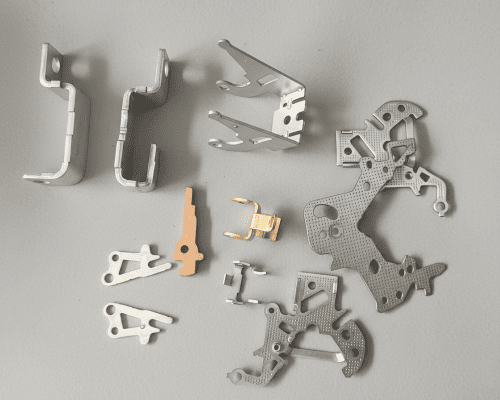
High-precision blanking, punching, and shearing operations for creating clean-edge parts from sheet metal. Advanced tooling ensures consistent quality and minimal burr formation.
- Blanking, punching, piercing operations
- Complex contours and hole patterns
- Steel, aluminum, copper alloys
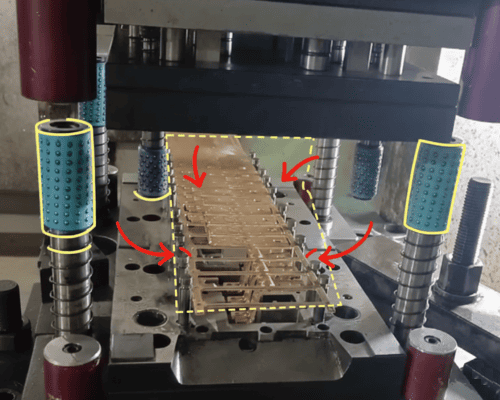
Precision Bending & Forming
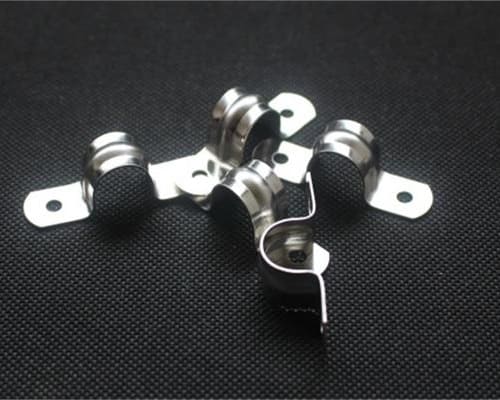
Accurate angle bending and forming operations for creating brackets, enclosures, and structural components. Advanced tooling ensures consistent bend angles and minimal springback.
- 90°, acute, and obtuse angle bending
- Multi-bend parts and complex geometries
- Springback compensation and control
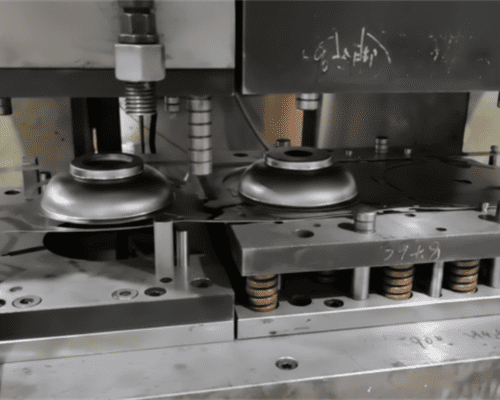
Deep Drawing Operations
Advanced deep drawing processes for creating cups, shells, and complex 3D shapes. Multi-stage operations achieve deep draw ratios while maintaining material integrity.
- Deep cups, shells, and enclosures
- Multi-stage progressive drawing
- Wrinkle and tearing prevention

Advanced Forming Operations
Specialized forming processes including embossing, coining, and bulging for creating textured surfaces, precise features, and complex 3D shapes with exceptional detail.
- Embossing, coining, and bulging
- Textured surfaces and fine features
- High-precision dimensional control
Wide Range of
Materials & Specs
Our stamping capabilities cover a comprehensive range of materials and specifications to meet diverse industrial requirements.
Steel Materials
- Carbon Steel (SPCC, SPCD, SPCE)
- Stainless Steel (304, 316, 430)
- Galvanized Steel (SECC, SGCC)
- High-strength Steel (HSLA)
Non-ferrous Metals
- Aluminum (1100, 3003, 5052, 6061)
- Copper & Brass (C11000, C26000)
- Beryllium Copper (C17200)
- Phosphor Bronze (C51000)
Technical Specifications
Quality Assurance
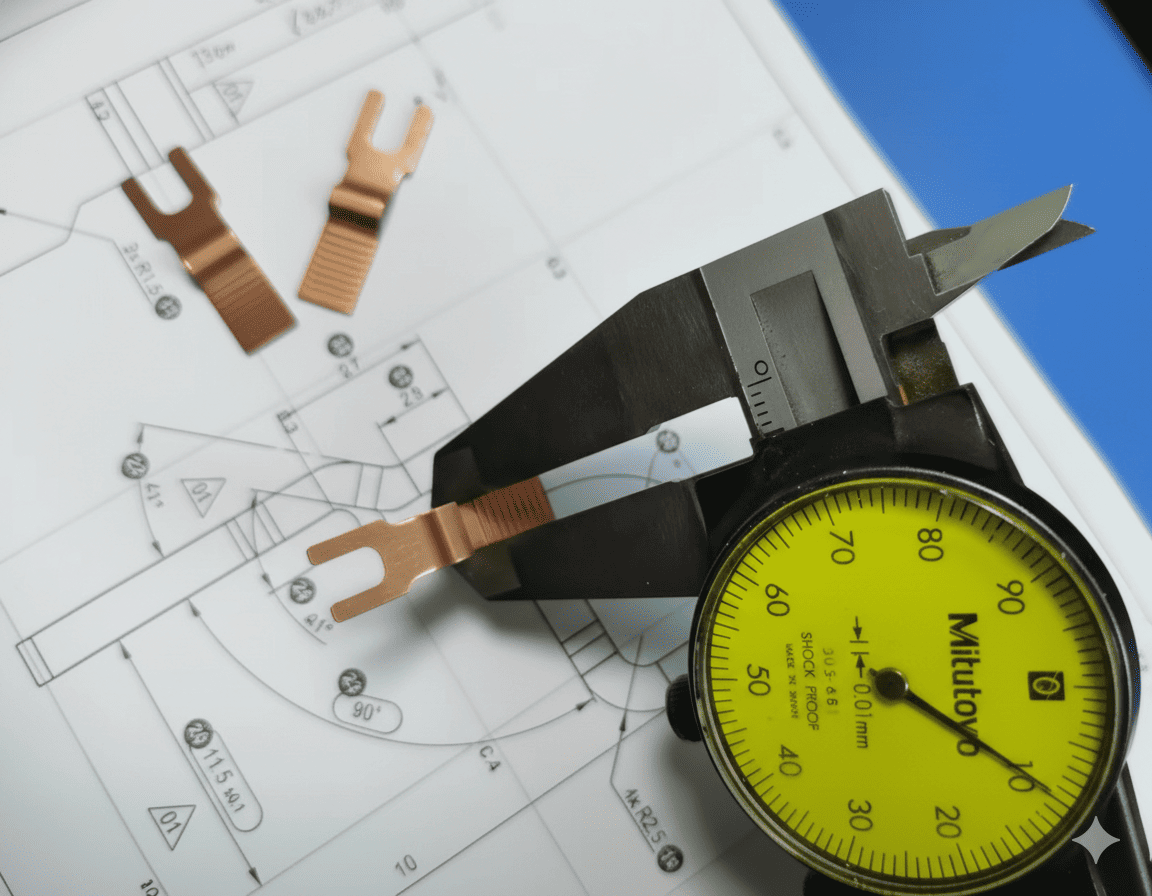
- Material certification & traceability
- First article inspection (FAI)
- Statistical process control (SPC)
- ISO 9001:2015 certified facility
Your Metal Stamping
Material Guide
Select the perfect metal material for your stamping project. Our expert guide covers stampability, die life considerations, and material-specific parameters to ensure optimal forming results, dimensional accuracy, and cost efficiency.
Surface Finishing Options
Complete your parts with professional surface treatments that enhance durability, appearance, and performance for any application.
Deburring & Surface Prep
- Mechanical deburring
- Tumbling & vibratory finishing
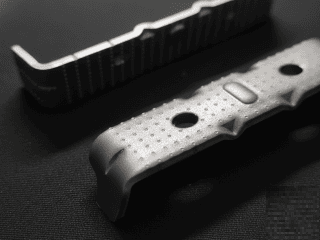
- Surface texturing
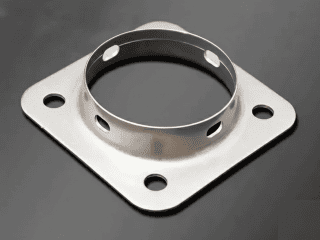
Corrosion Protection
- Zinc & nickel plating
- Passivation treatment
- Protective primers
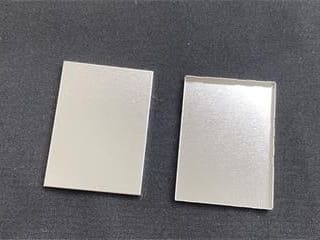
Electrical & Contact
- Gold & silver plating
- Tin plating
- Conductive coatings
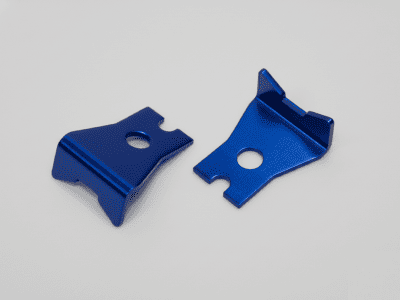
Appearance
- Powder coating
- Anodizing
- Brushed & polished finishes
Surface Finishing Specifications
Comprehensive finishing options for every application requirement
| Finish | Typical Materials | Common Applications | Key Options to Quote | Benefit |
|---|---|---|---|---|
|
Mechanical Deburring
Manual & automated edge finishing
|
Aluminum, Steel, Stainless Steel, Brass | Machined parts, brackets, housings | Edge radius (R0.1-R0.5mm), surface roughness | Safe handling, improved assembly |
|
Tumbling
Mass finishing process
|
Small metal parts, plastic components | Fasteners, small brackets, connectors | Media type, cycle time, surface finish grade | Uniform finish, cost-effective for volume |
|
Surface Texturing
Controlled surface patterns
|
Aluminum, Steel, Plastics | Grips, panels, decorative components | Pattern type, depth, coverage area | Enhanced grip, aesthetic appeal |
|
Zinc Plating
Electroplated protective coating
|
Steel, Iron alloys | Fasteners, brackets, automotive parts | Thickness (5-25μm), chromate type, color | Corrosion resistance, cost-effective |
|
Nickel Plating
Durable metallic coating
|
Steel, Copper, Aluminum | Electronics, hydraulic fittings | Thickness (10-50μm), hardness level | Superior corrosion & wear resistance |
|
Passivation
Chemical surface treatment
|
Stainless Steel, Titanium | Medical devices, food equipment | Process type (citric/nitric), testing req. | Enhanced corrosion resistance |
|
Gold Plating
Precious metal coating
|
Copper, Nickel-plated substrates | Connectors, circuit boards, contacts | Thickness (0.5-5μm), purity grade | Excellent conductivity, corrosion-free |
|
Silver Plating
High conductivity coating
|
Copper, Brass, Steel | RF components, electrical contacts | Thickness (2-15μm), anti-tarnish option | Superior electrical conductivity |
|
Tin Plating
Lead-free solderable finish
|
Copper, Steel, Brass | PCB components, electronic parts | Thickness (5-20μm), reflow compatibility | Excellent solderability, RoHS compliant |
|
Powder Coating
Durable polymer finish
|
Steel, Aluminum, Galvanized metal | Enclosures, frames, architectural parts | Color (RAL/Pantone), texture, thickness | Durable, eco-friendly, color variety |
|
Anodizing
Electrochemical oxide layer
|
Aluminum alloys | Aerospace parts, consumer electronics | Type (II/III), color, thickness (5-25μm) | Hard surface, corrosion resistance |
|
Brushed Finish
Directional surface texture
|
Stainless Steel, Aluminum | Architectural, appliances, trim parts | Grit size, direction, protective coating | Premium appearance, hides fingerprints |
Quick Selection Guide
Tooling & DFM Workflow
From initial RFQ to mass production, our systematic approach ensures optimal tooling design, manufacturing efficiency, and quality assurance at every stage.
RFQ & Drawing Review
- Technical feasibility analysis
- Material recommendations
- Cost estimation & timeline
- 24 hrs quote response
DFM Feedback
- Corner radius optimization
- Bend direction analysis
- Burr direction control
- Grain direction guidance
Die Design & Manufacturing
- 3D die design modeling
- Precision CNC machining
- EDM finishing
- Heat treatment & hardening
T0/T1 Trial & Inspection
- First article inspection
- Dimensional report (CMM)
- Surface quality check
- Process optimization
Customer Approval & Mass Production
- Sample approval process
- Production planning
- Quality control setup
- High-volume manufacturing
Typical Project Timeline
Comprehensive Resources for Stamping
Leverage our engineering expertise with comprehensive guides covering design optimization, secondary operations, and quality assurance for metal stamping projects.
Design Tips
Optimize your stamping designs for manufacturability with our comprehensive DFM guidelines and best practices.
- Minimum hole-to-edge distance recommendations
- Bend radius to material thickness relationship guidelines
- Burr direction control methods
- Flatness and deformation risk management strategies
- Deep drawing limits and multi-stage drawing strategies
2nd Operations
Complete your stamped parts with our full range of secondary operations and finishing services.
- Deburring/tumbling
- Tapping/threading
- Spot welding/laser welding
- Riveting/press fitting
- Surface treatment
- Assembly
Quality Control
Ensure consistent quality with our ISO-certified processes and comprehensive inspection protocols.
- First article inspection (FAI) procedures
- Statistical process control (SPC)
- CMM and optical inspection
- Material certification and traceability
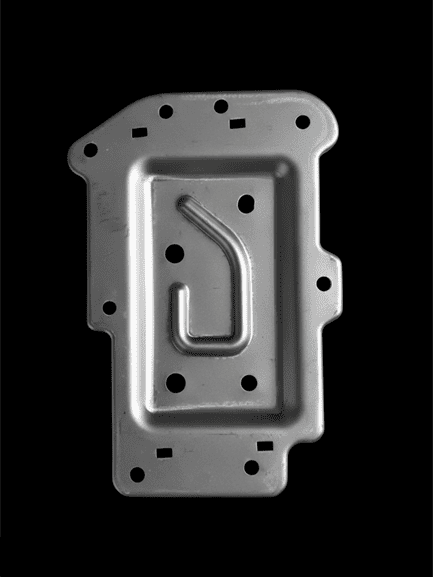
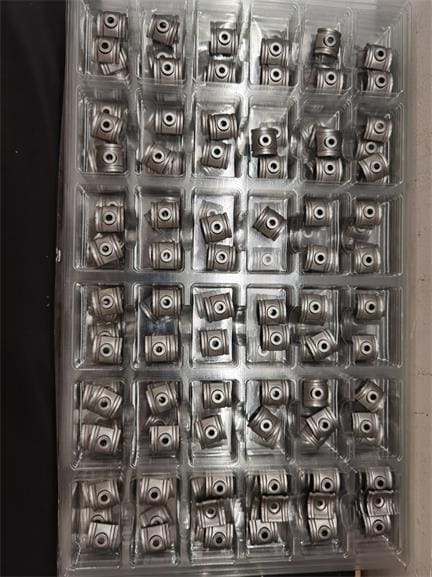
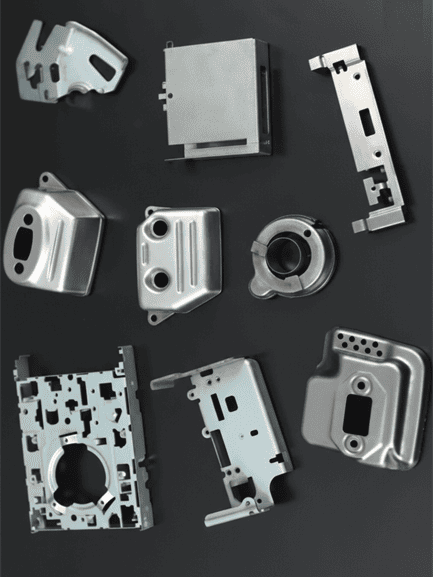
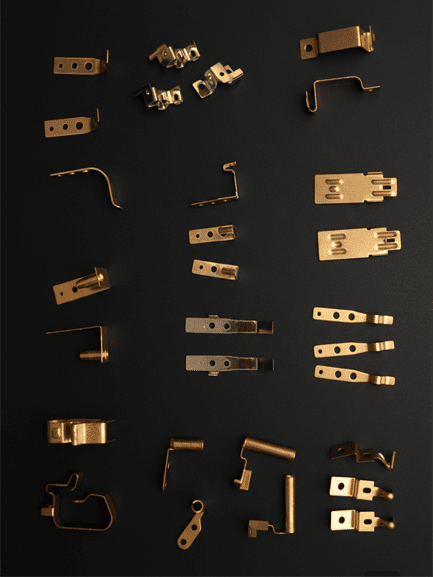
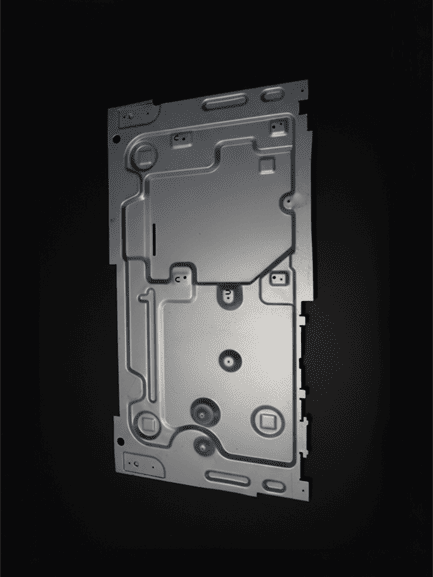
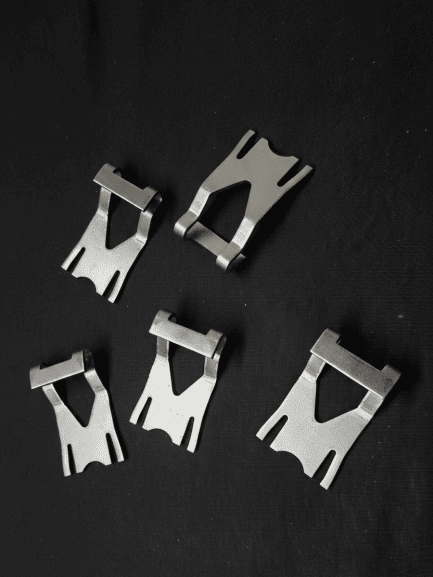
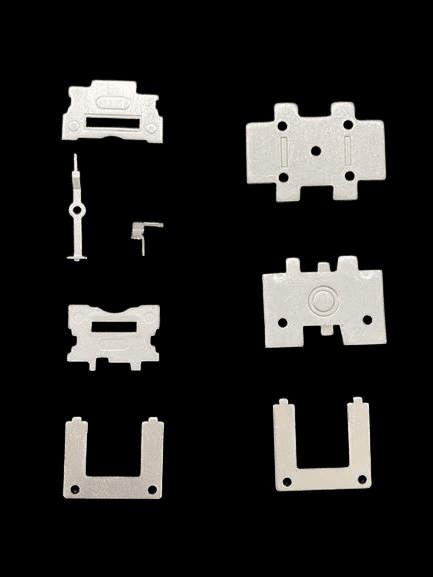
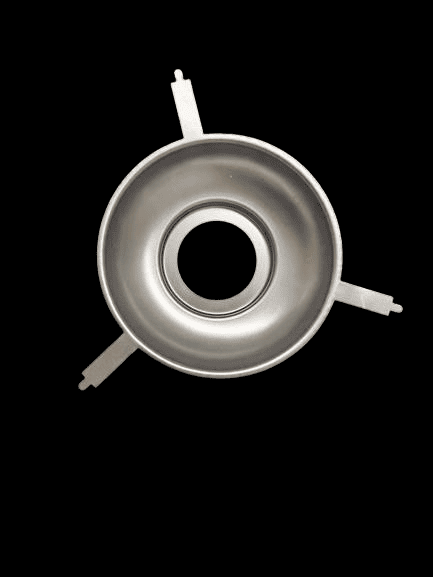
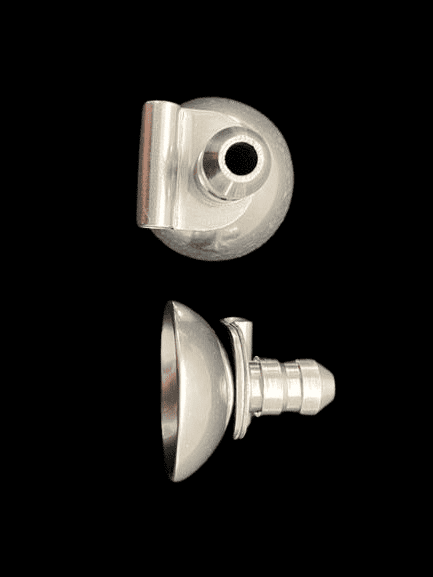
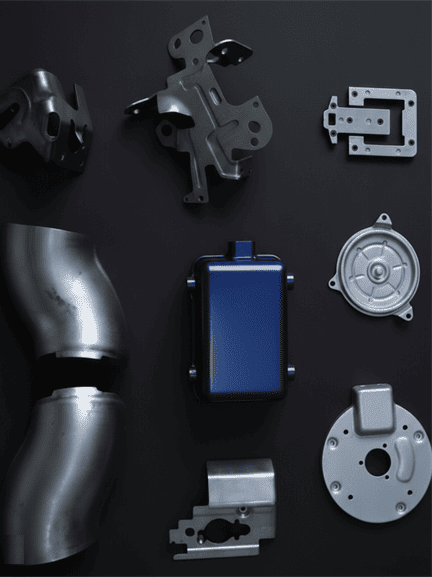
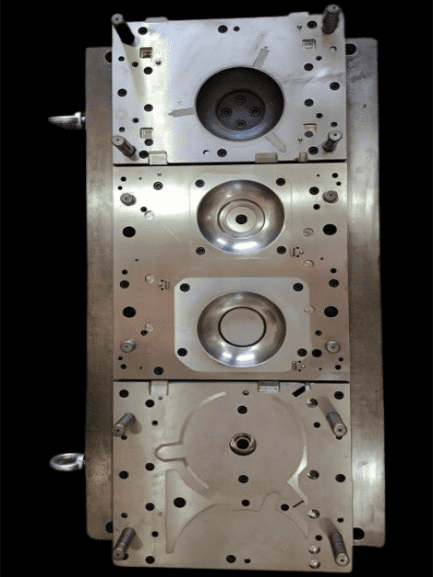
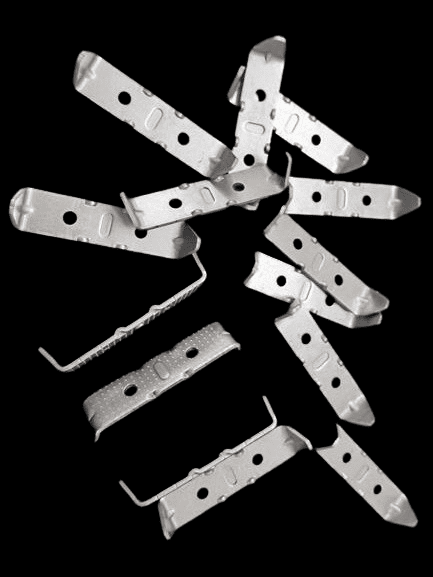
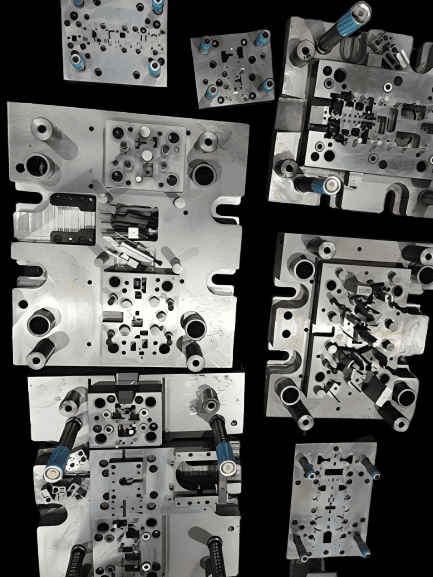
Stamping Parts and Tools
Made By Xu Feng

Frequently Asked
Questions
What are the typical lead times for molds and prototypes?
For mold development, typical lead times are 15-25 days for injection molds and 10-20 days for stamping dies. Prototype parts can be delivered in 5-7 days using CNC machining or 3D printing, allowing for design validation before full tooling investment.
What factors affect MOQ and pricing?
MOQ varies by process: CNC (1-100 pcs), Injection molding (500-1000 pcs), Stamping (5000+ pcs). Pricing factors include material costs, part complexity, tolerance requirements, surface treatments, and order volume. We provide detailed cost breakdowns with every quote.
How do you control burrs and sharp edges?
We implement automated deburring processes including vibratory finishing, tumbling, and precision hand deburring. All sharp edges are chamfered or radiused per drawing specifications. Our quality control includes 100% edge inspection to ensure safe handling and proper fit.
Still Have Questions?
Our engineering team is ready to discuss your specific manufacturing requirements and provide technical guidance.